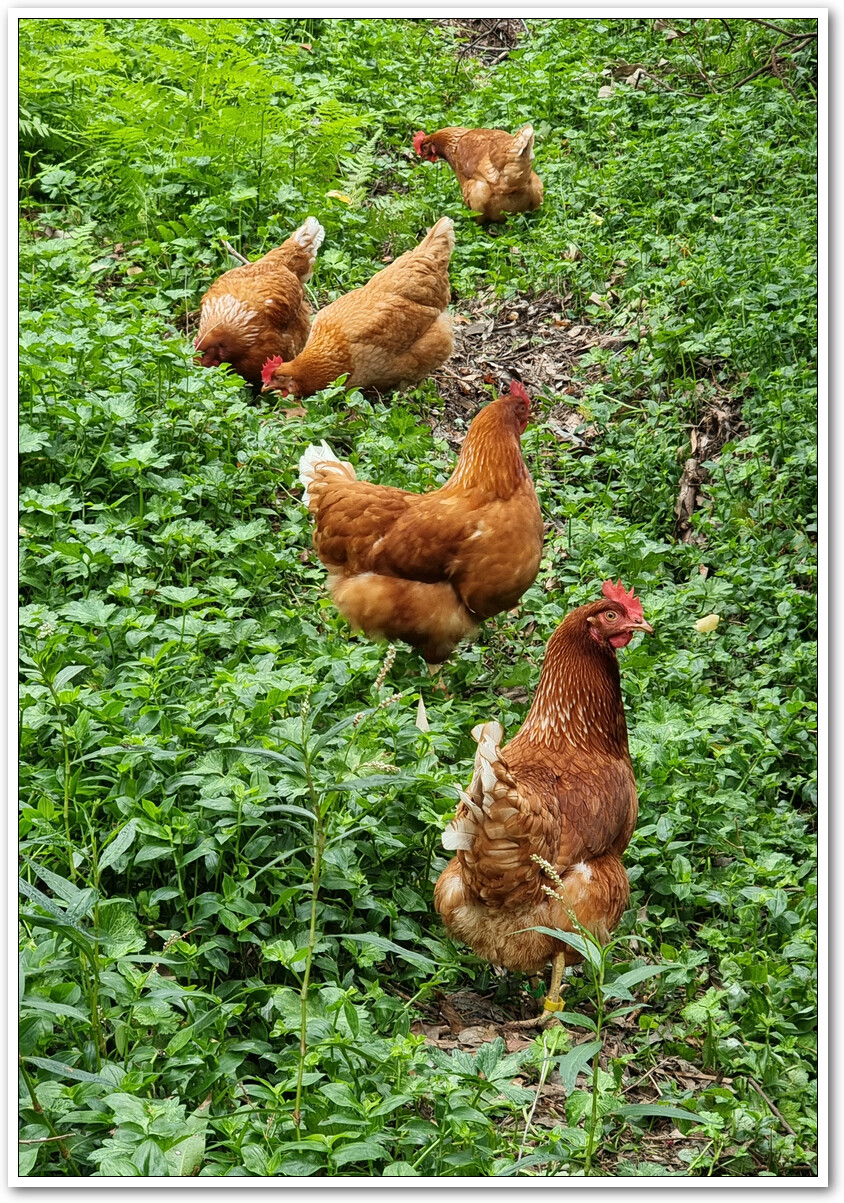
They're working hard to clear weeds and help restore degraded land.
Why have Landcare Chickens?
This plot of land is an "easement" because of the power transmission tower located on it, so development on it is forbidden and general use is discouraged. It has been fenced off for many years and, as it isn't used by anyone, care of the plot has been intermittent and infrequent. The result is that in places it became overgrown with the weed Tradescantia, alongside "Creeping Buttercup". By various measures, much of this plot can be called "degraded land". It's in dire need of some care. This is what part of the area looked like in September 2024. All of that green ground cover is tradescantia!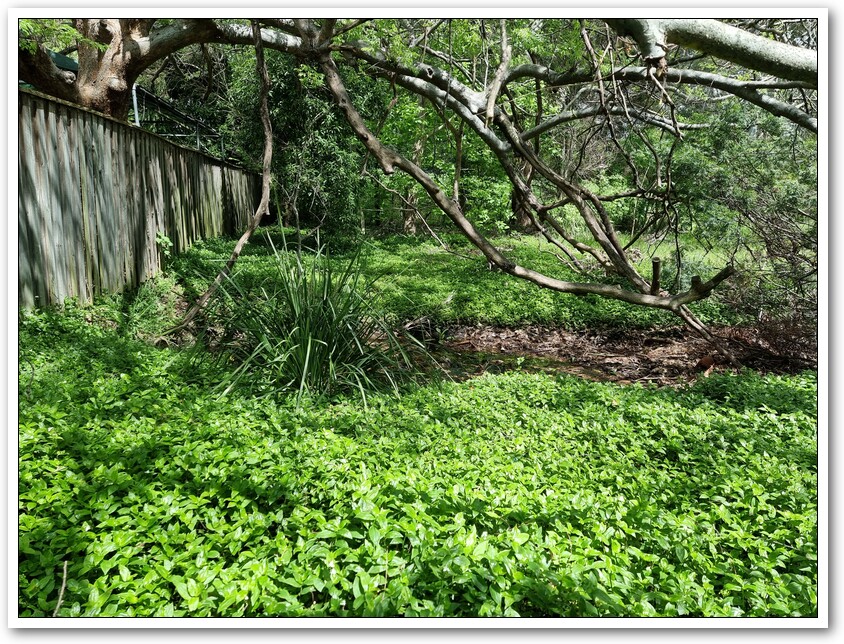
The Problem with Weeds
What's so bad about tradescantia and other weeds?
- Tradescantia fluminensis (or "trad", or the politically correct "wandering dude") crowds out other plants and reduces biological diversity in most respects.
- Creeping Buttercup (Ranunculus repens) grows along watercourses and contributes to reducing water flow. It also crowds out other plants.
Reasons for clearing the weeds in this plot
- Tradescantia and Creeping Buttercup are invasive foreign weeds, so they should be removed wherever they are found.
- Clearing the ground of trad cover helps improve soil quality, by encouraging more and varied life in the leaf litter and soil.
- Many people - and especially dogs - get allergic skin reactions from contact with trad.
- Trad spreads easily by live fragments, so removing it from along a watercourse makes it harder for it to spread into areas downstream.
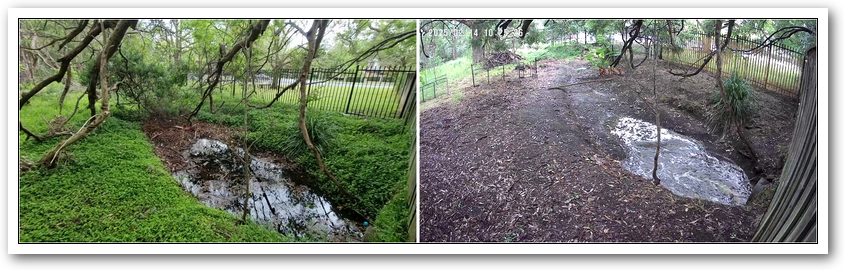
- Trad had helped to block the watercourse so that stormwater didn't drain well, leaving a semi-permanent pool. Over time the water in the pool would become stagnant and breed mosquitoes. Lots of mosquitoes meant that people living in houses nearby couldn't spend much time in their yards without needing to wear insect repellent.
- During heavy rain the stormwater couldn't drain quickly, so the drainpipe was more likely to get backed up, which often caused damaging flooding of the properties upstream of the pipe.
- Over the years a lot of litter has been tossed into the plot and the tradescantia hid it from sight. The plastic, broken glass and other materials don't belong in the soil.
Clearing weeds in a nature-friendly way
Goats are often used to clear degraded land of bushy weeds but they can be brutal to all the plants in an area. It turns out that chickens are also very good at clearing ground cover weeds without affecting much else.About the Landcare Chickens
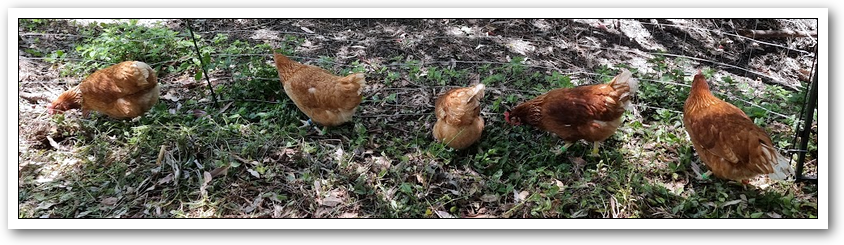
The breed of these chickens is "ISA Brown". That's the breed most used to produce the eggs you buy at the supermarket. They're robust, friendly chickens and it's great to see them living a happy life free range, rather than in a battery farm cage. Because these are work units (or "industrial chickens") they don't have names, just a colour label from the band on their right leg: Red, White, Blue, Yellow or Purple. There are hungry foxes about who'd love to eat a plump chicken, so the girls need somewhere safe to sleep. They spend their nights in an aviary on the property next door and are let out into their workplace every morning through a small gateway in the fence. At the end of each day they go back to the safety of the aviary without having to be told. They love eating the weeds (especially the trad) and will happily spend all day eating its leaves and shoots and digging up the roots. As they scratch the ground in search of other yummy things - insects and worms and such - they turn over the leaf litter, loosen the top layer of soil and, of course, their poo is a great fertiliser. All of this helps improve the soil quality. Also, the girls give us really tasty eggs and amuse us as we watch them go endlessly about their chickeny business. It's a "win-win" situation for all!
The Transformation
No slashing of the weeds has been done, nor have any herbicides or other controls been applied. Apart from a minimal human effort to clear some heavy materials using shovels, rakes and other implements of destruction, the chickens have done all the work and truly transformed the area in just a few months. Here are some photos that show changes over time, highlighting what a fantastic job these little dinosaurs have done.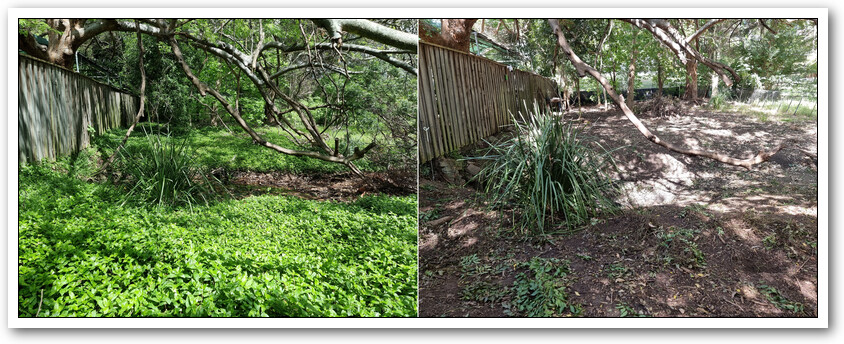
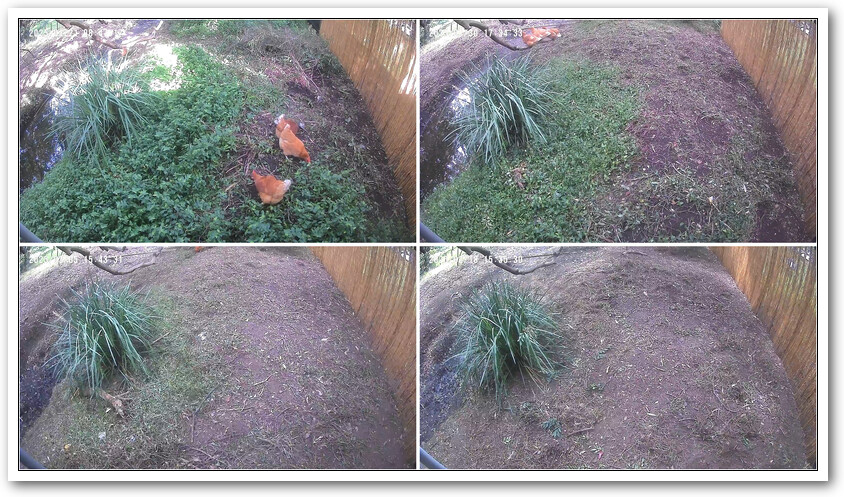 The grassy plant in these photos is the native Lomandra. It's way too tough for chickens to eat.
The Outcome and Benefits
- The trad has been eliminated from much of the area and continues to be reduced. It may eventually disappear entirely.
- The area looks more open and less forbidding.
- The local microclimate is now dryer, which is more as this area should be.
- The watercourse drains much faster now and the pool empties quickly. It should now drain better during heavy rain and reduce the likelihood of flooding upstream.
- With the pool draining quickly, the mosquito population has plummeted, much to the relief of people living nearby.
- Large amounts of litter have been removed from the site as the chickens dig it out.
From seemingly endless chip packets, plastic sheeting, bottles and tennis balls through to the odd shoe, book, and football, the equivalent volume of at least two red bins of rubbish has been removed so far.
Other benefits
- With the trad cleared along the fence, it's hoped that people will be less inclined to toss litter in.
- The landcare girls lay incredibly tasty eggs every day.
- Their entertaining presence brings pleasure to the community and brings people together.
- It may be increasing people's awareness of landcare and its benefits.
Hopes for the future
The primary hope is that grasses and other native plants will begin to populate the areas cleared of trad. As that happens, the diversity of wildlife in the plot should increase with a healthy balance of native species of plants and animals re-established. It may even reach the point where the Landcare Chickens become unwelcome intruders and have to be moved on. That would be a bit sad, but an otherwise great outcome for the local environment.Further reading: